
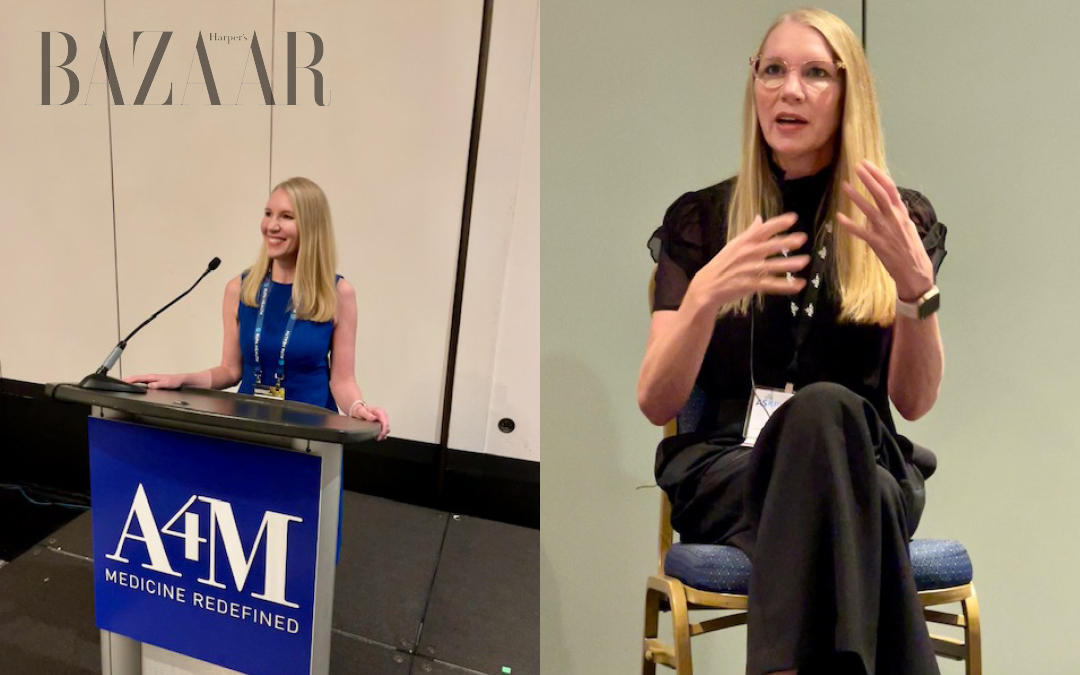
Photo Courtesy of: Dr. Erin Amato.
Generations have lived in the silent grip of depression, a darkness that defies neat diagnosis and stubbornly resists the remedies of its time. In the 1950s, when antidepressant medications first emerged, they carried the promise of relief and the weight of a revolution. For many, they worked. But for countless others, the pills dulled only the edges of despair, leaving the core untouched. In the decades since, as newer medications flooded the market and prescriptions rose, the hard truth has lingered: not every mind can be medicated into balance.
It is into this unresolved story that Dr. Erin Amato steps, a psychiatrist whose work and words insist that the human brain cannot be healed by chemistry alone. Raised in Billings, Montana, and trained in the rigorous corridors of Long Island Jewish Medical Center and the Cohen Children’s Medical Center, Amato carries the credibility of a physician and the urgency of a witness. She has seen the limits of medicine from the inside, and she has made it her calling to chart another way.

Breaking the Pill Paradigm
“When patients come to me after trying medication after medication, they often feel like failures. But the failure isn’t theirs. It’s that we’ve treated depression as a one-note illness when it’s a symphony of causes.” – Dr. Erin Amato.
Her new book, Think Outside the Bottle: How to Recover from Depression When Antidepressants Fail You, is both a manifesto and a manual. It asks a radical but necessary question: what if the very framework of modern psychiatry is too narrow? What if trauma, inflammation, hormone imbalances, and the intricate chemistry of the gut are not side stories, but central to the plot of mental illness?
Dr. Erin Amato does not discard traditional psychiatry. She is double board-certified in General Psychiatry and Child and Adolescent Psychiatry ; but she refuses to be bound by it. Over the last decade, she has introduced therapies to her Montana practice that once belonged on the fringes of medicine: Transcranial Magnetic Stimulation (TMS), IV ketamine treatments, genetic testing, nutritional supplementation. These are not fads to her; they are the fruits of a growing body of evidence and the quiet demand of patients whose suffering has outlasted the standard prescription.
Ketamine’s Promise and the Courage to Use It
Among these therapies, ketamine stands out. Long known as an anesthetic and at times maligned as a street drug, ketamine has in recent years emerged as one of the most promising treatments for severe depression and post-traumatic stress disorder. Administered intravenously under medical supervision, it can spark rapid improvements in mood, even when years of antidepressant use have brought no relief.
“Ketamine isn’t a miracle, but it can be a door that finally opens for people who’ve spent years knocking.”
Since 2016, Dr. Erin Amato has offered IV ketamine therapy to patients struggling with PTSD, anxiety, and mood disorders. Her early adoption of the therapy, far from the coastal research hubs where it first gained traction, speaks to a certain moral clarity: that innovation in mental health cannot remain a privilege of geography or prestige.
The numbers support her conviction. The U.S. psychiatry clinic market, valued at nearly $27 billion in 2024, is projected to grow steadily over the next decade, even as traditional antidepressants plateau in effectiveness for treatment-resistant cases. Mental health and addiction treatment centers are expanding at double-digit rates, signaling a hunger for solutions that reach beyond the pharmacological status quo. The forecast is clear: the future of psychiatry belongs to those willing to integrate science with boldness.

A Wider Vision of Healing
Amato’s approach goes beyond administering treatments and instead redefines what it means to heal. She blends talk therapy and medication with functional medicine testing, lifestyle interventions, and nutritional strategies to unearth the root causes of illness. In doing so, she challenges a system that too often rewards symptom management over true recovery.
Her work also mirrors a cultural shift: a national audience, weary of quick fixes and skeptical of miracle pills, is demanding care that sees the whole person. Telepsychiatry, precision medicine, and the growing legitimacy of integrative practices point toward a psychiatry that is both more personal and more daring.

The Moral Imperative to Think Bigger
To tell this story is to confront a simple but uncomfortable truth: for millions, the promise of antidepressants was never fulfilled. Dr. Erin Amato does not claim to have the final answer. But her career which rooted in rigorous science, enriched by functional medicine, and emboldened by the careful use of ketamine, offers something just as valuable: proof that psychiatry can evolve.
In Think Outside the Bottle, she gives voice to those who have suffered too long in silence and offers a vision of care that is as expansive as the human spirit itself. If the first revolution of modern psychiatry was the pill, perhaps the second is the courage to imagine what comes after.
Harper’s Bazaar Vietnam